AI Won’t Replace Great Employees. It Will Change How They Work.
AI Won’t Replace Great Employees. It Will Change How They Work
Artificial intelligence is changing the workplace faster than many businesses expected.
Tasks that once required hours of manual work can now be completed in minutes. Employees can use AI to analyze information, draft content, summarize documents, automate repetitive processes, and support faster decision making.
As these capabilities continue to improve, one question keeps coming up:
Will AI replace employees?
For some roles, AI will certainly automate parts of the work. But for great employees, the people who solve problems, build relationships, think critically, adapt to change, and understand the bigger picture, AI is less likely to be a replacement and more likely to become a powerful coworker.
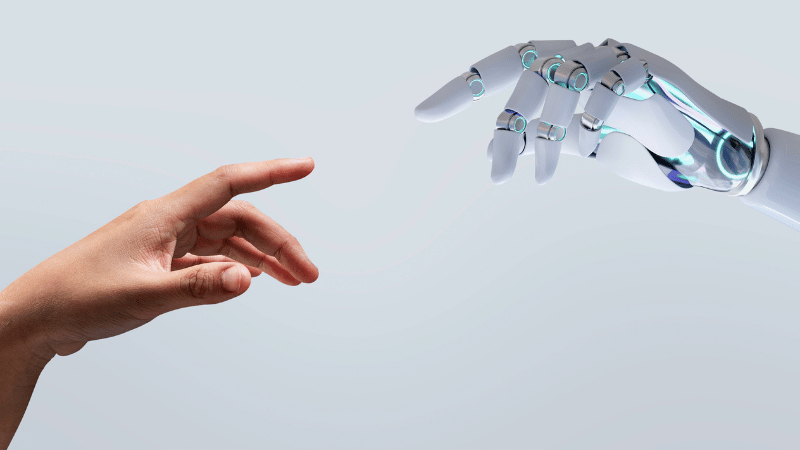
The real shift is not from humans to AI.
It is from humans working without AI to humans working with AI.
AI Is Changing Jobs, Not Just Eliminating Them
Every major technological advancement has changed the way people work.
Computers transformed administrative work. The internet changed communication and information sharing. Smartphones changed how businesses interact with customers and employees.
AI represents another major shift.
Instead of simply performing tasks faster, modern AI can assist with work that traditionally required significant human effort. It can identify patterns, generate ideas, process large amounts of information, and support decision making.
That does not necessarily mean the employee becomes unnecessary.
It means the employee can spend less time on repetitive work and more time on activities that require uniquely human capabilities.
In many workplaces, AI is increasingly becoming another kind of coworker. It can help employees research information, organize ideas, analyze data, and complete routine tasks, while the employee remains responsible for applying judgment and making meaningful decisions.
For example, an employee might traditionally spend hours researching information and preparing a report. With AI assistance, much of the research and initial drafting can potentially be completed faster.
The employee can then focus on reviewing the information, applying judgment, identifying what matters, and turning the findings into meaningful business decisions.
AI handles more of the process.
The employee provides more of the purpose.
The Best Employees May Become Even More Valuable
AI does not automatically make someone a great employee.
In fact, the opposite may happen.
As AI becomes more accessible, basic tasks become easier to perform. This can make skills such as critical thinking, communication, creativity, leadership, and problem solving even more important.
Consider two employees who have access to the same AI tools.
One simply accepts whatever the AI produces.
The other knows how to ask better questions, recognize mistakes, challenge assumptions, improve the output, and apply it to the company’s goals.
The technology is identical.
The results are not.
The difference is the employee.
Just like working with a great coworker, working effectively with AI requires communication, critical thinking, and knowing how to make the most of each person’s strengths.
This is why businesses should not view AI solely as an automation strategy. It should also be viewed as a way to amplify employee capability.
For businesses looking to build strong teams while taking advantage of technology, optiBPO provides access to skilled professionals who can become an extension of an organization’s existing workforce.
AI Can Give Employees More Time for Meaningful Work
One of the biggest opportunities presented by AI is reducing repetitive work.
Employees often spend significant portions of their day on activities such as:
- Data entry
- Scheduling
- Email drafting
- Document summarization
- Basic research
- Report preparation
- Information organization
- Routine customer inquiries
- Repetitive administrative processes
These tasks are not necessarily unimportant.
But they are not always the best use of a highly capable employee’s time.
When AI can assist with repetitive processes, employees can redirect their attention toward activities that create greater value.
That might mean spending more time with customers.
It might mean developing new ideas.
It might mean solving complex problems.
It might mean coaching team members.
Or it might simply mean having more time to focus deeply on the work that matters most.
A good coworker does not simply take work away from you. They help you accomplish more together. AI can serve a similar role when it is used thoughtfully and responsibly.
The goal is not to make employees less important. It is to help them spend more of their working hours on work that matters.
The Future Belongs to Human and AI Collaboration
The most successful organizations may not be the ones that replace the most employees with AI.
They may be the ones that figure out how to combine human expertise with machine capabilities most effectively.
AI is exceptionally good at processing information and performing certain repetitive tasks at scale.
People are exceptionally good at understanding context, relationships, emotions, ambiguity, ethics, and consequences.
Together, they can become more effective than either one operating alone.
Think of AI as a force multiplier and an increasingly capable coworker.
A salesperson can use AI to research a prospect before a meeting, but the salesperson still needs to understand the customer’s actual concerns.
A marketer can use AI to generate content ideas, but a skilled marketer still needs to understand the audience and brand.
A customer service professional can use AI to quickly access information, but empathy and judgment still matter when dealing with a frustrated customer.
A manager can use AI to analyze performance data, but leadership still requires understanding people.
AI can provide information.
Great employees turn information into action.
AI Skills Will Become Part of Being a Great Employee
As AI becomes embedded in everyday business operations, knowing how to work with AI will increasingly become a valuable workplace skill.
Employees do not necessarily need to become AI engineers.
They do need to understand how to use AI responsibly and effectively.
That includes knowing how to:
- Write effective prompts and instructions
- Verify AI generated information
- Identify potential errors and biases
- Protect confidential information
- Combine AI output with human judgment
- Use AI to improve existing workflows
- Recognize which tasks should remain human led
This creates a new category of workplace capability: AI literacy.
Just as employees once needed to become comfortable using computers and business software, tomorrow’s workforce will increasingly need to become comfortable working alongside AI.
For organizations building an offshore team, this shift creates another opportunity. Businesses can combine skilled professionals with AI enabled processes to improve productivity while maintaining the human expertise needed to deliver quality work.
The ability to work effectively with an AI coworker may eventually become as normal as knowing how to collaborate with a human coworker today.
Companies Need to Invest in People, Not Just Technology
Buying AI software is easy.
Creating an AI ready workforce is harder.
Organizations that want to benefit from artificial intelligence need to think beyond technology implementation. They need to consider how employees will actually use these tools.
That means providing training.
It means redesigning workflows.
It means establishing clear guidelines.
It means giving employees opportunities to experiment.
And most importantly, it means creating a culture where AI is viewed as a tool for improvement rather than simply a threat to job security.
This is particularly important for companies using outsourcing services as part of their workforce strategy.
The right outsourcing partner should not simply provide people to perform tasks. It should help businesses build teams that can adapt as technology, processes, and customer expectations change.
Employees are more likely to embrace AI when they understand how it can make their work better.
Instead of asking:
“How many jobs can AI eliminate?”
Businesses should also ask:
“How much more can our people accomplish with AI?”
That change in perspective can fundamentally alter how organizations approach workforce transformation.
The Human Advantage Still Matters
There are things AI can generate.
There are things AI can calculate.
There are things AI can automate.
But there is still enormous value in human experience.
A great employee understands why something matters, not just what needs to be done.
They can navigate difficult conversations.
They can build trust with customers and colleagues.
They can recognize when something does not feel right.
They can make decisions when the answer is not obvious.
They can take responsibility for outcomes.
And they can bring creativity and perspective shaped by real world experience.
These qualities do not disappear because AI becomes more capable.
If anything, they become more important.
A great coworker brings more than efficiency to a team. They bring perspective, collaboration, accountability, and human understanding. AI can support some aspects of teamwork, but it does not replace the value of genuine human connection.
This is especially relevant in roles where human interaction remains essential. Customer service outsourcing can benefit from AI assisted processes, but empathy, communication, and problem solving remain critical when employees interact directly with customers.
The same principle applies to specialized functions such as IT support and accounting. AI can assist professionals with information and repetitive processes, but experienced employees still provide judgment, oversight, and accountability.
The Workplace Is Moving Toward Augmented Employees
The future of work does not have to be a choice between people or technology.
It can be about creating better combinations of both.
An augmented employee is someone who uses technology, including AI, to extend their capabilities.
They are not replaced by the technology.
They become more capable because of it.
Imagine a team where employees can quickly summarize hundreds of pages of information, automate repetitive administrative tasks, generate first drafts, analyze data, and explore potential solutions.
The team still needs people.
But those people can potentially operate at a completely different level.
They can spend more time thinking strategically.
They can respond faster.
They can experiment more.
They can serve customers better.
They can focus on innovation rather than administration.
AI may become another valuable coworker in that environment, supporting employees while allowing them to focus on the responsibilities that require human expertise.
That is where the real opportunity lies.
What Businesses Should Do Next
Organizations preparing for an AI driven workplace do not need to transform everything overnight.
A practical approach can start with a few key steps.
1. Identify Repetitive Work
Look at the tasks employees perform every day and identify which activities are repetitive, time consuming, or heavily administrative.
2. Find Opportunities for AI Assistance
Determine where AI can safely support employees without compromising quality, security, or customer experience.
3. Train Employees
Give employees the knowledge and confidence to use AI effectively rather than expecting them to figure everything out themselves.
4. Keep Humans Involved
AI generated work should still be reviewed when accuracy, judgment, customer relationships, or business decisions are involved.
5. Measure Outcomes
Do not implement AI simply because it is popular. Measure whether it actually improves productivity, quality, employee experience, customer experience, or business results.
AI Can Strengthen the Right Workforce
For businesses exploring outsourcing to the Philippines, AI adds another dimension to the conversation.
The value of an offshore workforce is not simply about completing tasks at a lower cost. The right team can bring expertise, flexibility, communication skills, operational knowledge, and the ability to grow alongside the business.
AI can enhance that value.
A skilled employee using AI effectively may be able to accomplish more in less time, identify problems faster, provide better support, and spend more time on activities that require human judgment.
That means businesses do not necessarily have to choose between investing in technology and investing in people.
They can do both.
The Question Is Not Whether AI Will Change Work
It will.
The more important question is how businesses choose to respond to that change.
Companies can treat AI as a way to reduce headcount and cut costs.
Or they can use it to help their best people become even better.
The organizations that take the second approach may discover that AI is not just an automation technology.
It is a workforce transformation technology.
It can help employees move away from repetitive tasks and toward higher value work. It can give teams more time to think, create, solve problems, and build relationships. And it can allow businesses to get more value from the talent they already have.
AI will not necessarily replace great employees.
But great employees who know how to work with AI may have a significant advantage over those who do not.
The future of work is not simply human or artificial intelligence.
It is human intelligence amplified by artificial intelligence.
For businesses ready to explore what a technology enabled workforce can look like, optiBPO can help connect organizations with skilled professionals who can become an extension of their existing teams.