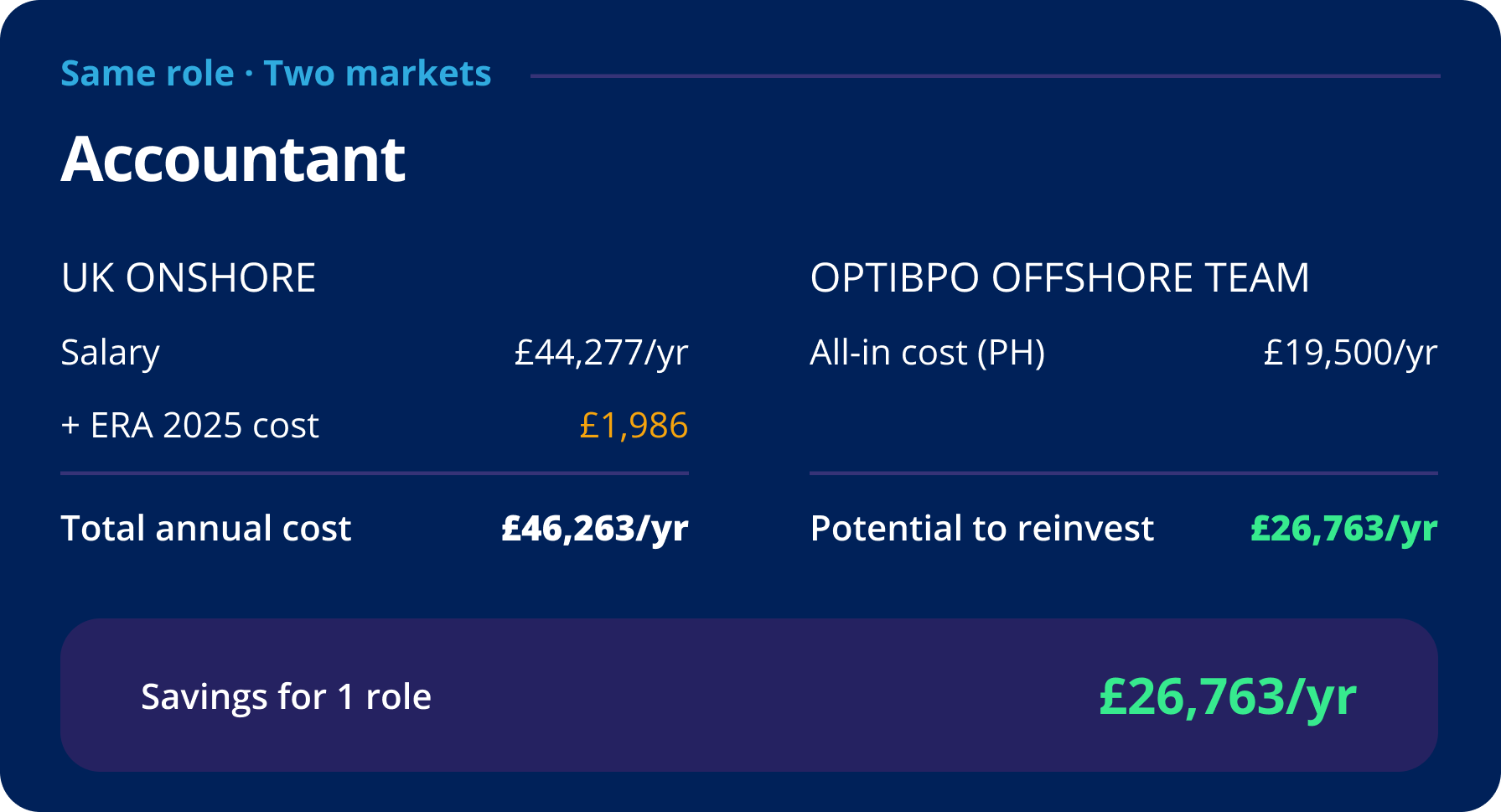
Why Productivity Is More Important Than Headcount
For many businesses, growth still follows a familiar formula: more work means more people.
But as costs rise and competition increases, simply adding headcount is no longer enough. A larger workforce does not automatically create greater productivity. In some cases, it can create more management, higher overhead and greater operational complexity.
For CEOs, the more important question is not “How many people do we need?”
It is “How much more can we achieve with the right workforce?”
The Problem With Always Adding Headcount
Every new employee comes with a cost.
Recruitment, onboarding, training, equipment, management and benefits all add to the cost of growing a team. And when hiring becomes the default response to increasing workloads, those costs can quickly become difficult to control.
The problem is not hiring itself.
The problem is assuming that more headcount automatically means more capacity.
A business can have a large team and still struggle with slow processes, repetitive tasks, skills gaps and inefficient allocation of resources.
That is why businesses need to think about productivity over headcount.
Productivity Creates More Capacity
Productivity is about getting more value from the resources already available.
Better processes can remove unnecessary work. Technology can reduce repetitive tasks. Specialised employees can focus on higher value responsibilities. And the right workforce structure can give a business additional capacity without requiring every function to be built internally.
This changes the conversation.
Instead of asking how many people need to be added, businesses can ask which functions need more capacity, which skills are required and what workforce model can deliver that capacity most efficiently.
The Answer Is Not Simply Fewer People
Focusing on productivity does not mean reducing the workforce.
It means making the workforce work better.
Businesses still need talented people. They simply need to be strategic about where those people are located, what they do and how their roles support the wider organisation.
For some businesses, that means building larger internal teams.
For others, it means combining their existing workforce with a flexible global team that can provide specialised skills and additional capacity.
This is where outsourcing can become more than a cost saving exercise.
It can become a productivity strategy.
How optiBPO Helps Businesses Build for Productivity
optiBPO helps businesses build and manage dedicated global teams designed around their operational needs.
Instead of simply adding more people to an organisation, optiBPO works with businesses to identify the roles, skills and functions required to create a more effective workforce.
From customer support and administration to technology, finance, marketing and other business functions, teams can be structured around the work that needs to be done.
This gives businesses access to a broader talent pool while reducing the need to build every function entirely in house.
The result is a workforce designed around workforce productivity, not simply headcount.
A Smarter Way to Scale
The best workforce is not necessarily the biggest one.
It is the one that gives the business the capacity, skills and flexibility it needs to grow.
With the right combination of internal employees and dedicated global teams, businesses can increase capacity while keeping their operations more flexible and their resources focused on the work that matters most.
That is the real opportunity behind productivity over headcount.
It is not about doing more with fewer people.
It is about doing more with the right people, the right structure and the right strategy.
For CEOs looking beyond traditional hiring models, optiBPO’s global workforce solutions provide a practical way to build a more productive, scalable workforce.